ECB Approved Artificial Cricket Pitch: The 2026 Buying Guide
Did you know the ECB doubled its investment through the County Grants Fund to £5 million for 2026? This significant boost in capital means hundreds of grassroots projects will move forward this year, yet many club committees still feel overwhelmed by the technical requirements. Choosing an ECB approved artificial cricket pitch involves more than just picking a surface. It requires a deep understanding of the TS6 performance standards to ensure your facility qualifies for vital grants. It's natural to feel concerned about long-term maintenance or whether a woven or tufted system is the right choice for your specific environment.
We understand that you need a reliable, all-weather practice area that supports player development without becoming a financial burden. This 2026 buying guide provides the clarity you need to handle funding deadlines and technical specifications with confidence. We will examine the latest durability trends, explain the essential groundwork requirements, and show you how to secure a high-performance system that serves your club for up to 20 years.
Key Takeaways
- Learn why an ECB approved artificial cricket pitch is mandatory for clubs seeking to access the ECB County Grant Fund or Sport England financing.
- Explore the technical anatomy of a professional pitch, including how the choice of sub-base and shock pads affects player safety and ball performance.
- Compare the durability and performance of woven versus tufted surfaces to make an informed investment for your facility’s specific usage levels.
- Navigate the complexities of planning permission and site surveys to prevent costly delays during the construction of your new practice area.
- Understand why expert installation is essential for maintaining a valid warranty and achieving the 20 year lifespan expected of professional non-turf systems.
What Defines an ECB Approved Artificial Cricket Pitch?
The England and Wales Cricket Board (ECB) maintains strict oversight of non-turf pitches (NTP) to ensure the playing experience mirrors natural turf as closely as possible. An ECB approved artificial cricket pitch isn't just a product; it's a vetted system that meets the "Performance Standards for Non-Turf Cricket Pitches Intended for Outdoor Use," specifically the TS6 document. These regulations govern every aspect of the pitch from the sub-base construction to the final surface weave. Beyond technical specs, the ECB also upholds a voluntary Code of Practice for installers. This ensures that the professionals handling your facility are committed to minimum standards of design and craftsmanship, protecting the club's investment from the ground up.
The technical requirements also dictate how the ball interacts with the surface. An approved system regulates pace and seam response, preventing the erratic "tennis ball" bounce often found in low-quality, unapproved carpets. This consistency is what allows a non-turf facility to function as a legitimate training tool for professional-grade cricket. By adhering to the TS6 standards, clubs ensure that their practice area isn't just a convenience but a high-performance environment that accurately prepares players for match conditions on natural grass. It's about providing a safe pair of hands for the club's future talent.
The Performance Criteria for Approval
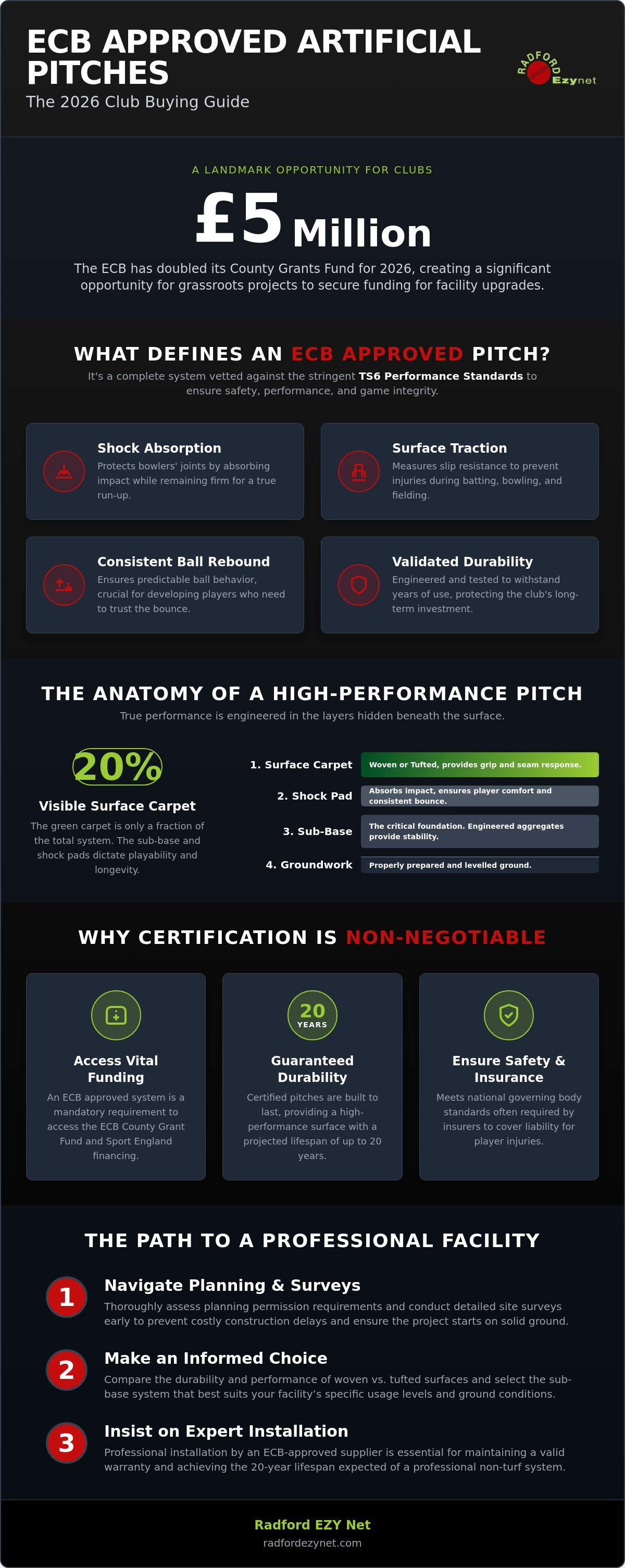
To receive approval, a system must undergo rigorous testing by accredited laboratories. These tests focus on player safety and game integrity. Vertical deformation and shock absorption are critical; the pitch must absorb impact to protect bowlers' joints while remaining firm enough for a true run-up. Surface traction and slip resistance are also measured to prevent injuries during fielding or batting. Finally, the system must demonstrate consistent ball rebound height. This uniformity ensures that a delivery behaves predictably across the entire wicket, which is vital for developing young players who need to trust the bounce. Understanding these cricket pitch basics helps committees appreciate why specific materials are non-negotiable for professional standards.
Why Certification Matters for Your Club
Certification is the gatekeeper for financial support. With the ECB doubling its County Grant Fund to £5 million for 2026, clubs have a unique opportunity to upgrade. However, you cannot access these grants or Sport England funding unless you install an ECB approved artificial cricket pitch. It's a binary requirement. Beyond funding, insurance providers often require facilities to meet national governing body standards to cover liability for injuries. Choosing an approved system also guarantees a validated durability standard. This protects your facility as a long-term asset, ensuring it can withstand the projected 20 years of use without premature failure or costly refurbishments.
The Anatomy of a High-Performance Non-Turf Pitch (NTP)
A professional non-turf pitch is a complex piece of engineering. While the green surface carpet is the most visible element, it represents only about 20% of the total system. The true performance of an ECB approved artificial cricket pitch is determined by the layers hidden beneath the surface. For a facility to offer professional-grade practice, every component must work in harmony to replicate the characteristics of a well-prepared natural wicket. This multi-layered approach ensures that the pitch remains stable under the heavy footfalls of fast bowlers while providing the consistent ball response that batters need to build confidence.
Neal Radford, founder of Radford EZY Net and former England international, often highlights that a poor base is the quickest way to ruin player development. If the foundation is compromised, the ball will not carry to the wicketkeeper or bounce with any degree of predictability. This makes practice sessions counterproductive and, in some cases, dangerous. The standards required for an ECB approved artificial cricket pitch ensure that the sub-base and shock pads are designed to prevent these issues. Choosing the right configuration requires an understanding of your local ground conditions. You can explore our cricket practice nets to see how these engineered systems integrate with high-quality cages.
A-Base vs. Dynamic Base Systems
The sub-base is the most critical factor in the longevity of your facility. An engineered "A-Base" uses bound aggregates to create a rigid, concrete-like foundation. This provides maximum stability and a very consistent bounce, making it ideal for high-use match pitches. Conversely, dynamic bases use unbound stone. These systems offer superior drainage performance in areas prone to heavy waterlogging. The choice of base directly affects the lifespan of the top carpet; a shifting or sinking base will cause the surface to tear or ridge, leading to expensive repairs before the system reaches its 20 year potential.
The Shock Pad: The Secret to Realistic Bounce
The shock pad is the layer that sits between the base and the carpet. Its primary role is to regulate ball pace and protect player health. High-density pads create a faster, "truer" pitch, while lower densities can deaden the bounce. Beyond performance, the shock pad acts as a critical safety feature. It absorbs the impact energy when a fast bowler lands, significantly reducing the stress on their ankles, knees, and lower back. ECB compliance requires specific thickness and density standards to ensure that every approved system provides this essential level of joint protection and realistic playability.
Woven vs. Tufted Surfaces: Making the Right Choice
Selecting the top layer for an ECB approved artificial cricket pitch is a strategic decision that affects both the playing experience and the facility's lifespan. The primary distinction between the two available systems lies in how the yarn attaches to the backing. In a woven carpet, the yarn and backing are interlaced during the manufacturing process, creating a single, integrated structure. Tufted carpets are made by punching the yarn through a pre-existing backing and securing it with an adhesive. While both designs can meet the TS6 performance standards, they offer different benefits for ball response and long-term wear. It's essential to match the surface to your club's specific coaching goals and volume of play.
Performance remains the priority for competitive clubs. Woven surfaces are traditionally preferred for their ability to take spin and seam more effectively. The multi-directional weave provides a consistent "grip" for the ball, which is vital for developing spinners. However, modern research is shifting the conversation around durability. A study by Labosport showed that tufted surfaces could endure nearly twice as much use as woven ones in certain high-traffic scenarios. To achieve a truly professional environment, you must consider how the surface integrates with bespoke cricket netting systems. A high-quality cage and net setup protects the investment by ensuring the carpet is used correctly and remains free from external debris.
Woven Carpets: The Professional Standard
Woven carpets provide exceptional multi-directional strength. This structural integrity makes them highly resistant to "burrowing," a common issue where bowlers' spikes tear into the backing of the carpet. Because the yarns are woven together, the surface provides the most consistent ball deviation across its entire life. While the initial cost of a woven ECB approved artificial cricket pitch can be higher, the cost-benefit analysis often favors this option for clubs with established senior sections. It offers a premium feel that closely mimics a high-quality natural turf wicket during the peak of summer.
Tufted Carpets: The Budget-Friendly Alternative
Tufted carpets serve as an excellent entry point for primary schools and junior practice areas. They're typically more cost-effective and offer a softer feel underfoot. However, they require a more diligent maintenance schedule to prevent pile flattening. If the fibers lay flat, the ball pace becomes inconsistent and the surface loses its grip. These systems are often the preferred choice for multi-use sports areas where the facility might host activities beyond cricket. For clubs on a strict budget, a tufted system provides a safe, approved environment that still qualifies for essential ECB funding and grants.
Planning and Funding Your Artificial Pitch Installation
The transition from selecting a surface to breaking ground requires meticulous preparation. A high-quality ECB approved artificial cricket pitch is only as good as the land it sits on. Many clubs make the mistake of requesting remote quotes based on satellite imagery, but this ignores the unique topography and soil composition of your ground. A robust cricket facility design and build plan must account for drainage and levels before a single stone is laid. Without this foresight, even the most expensive woven carpet will eventually suffer from dips or waterlogging. It's about ensuring your investment remains a stable asset for decades.
Planning permission is another critical hurdle that committees often overlook. Although these facilities are relatively small, they're classified as sports construction projects. You'll need to demonstrate that the installation won't negatively impact local biodiversity or cause noise disturbances to neighbors. We recommend starting this process at least six months before your intended build date to avoid seasonal delays. Navigating these regulations early ensures the project stays on track and avoids the stress of late-stage revisions that could jeopardize your funding eligibility.
The Site Survey Process
Radford EZY Net insists on conducting free, in-person site inspections rather than providing generic estimates. Our specialists assess ground stability to ensure your sub-base won't sink over time, which is the most common cause of non-turf pitch failure. We also evaluate access for heavy machinery. If a site is landlocked or has narrow entry points, the construction strategy must be adjusted to protect your existing outfields and pathways. This thoroughness at the start prevents unexpected costs from arising once the work begins.
Securing Grants and Investment
The financial landscape for 2026 is exceptionally favorable. The ECB has doubled its County Grant Fund to £5 million, offering clubs between £1,000 and £15,000 for facility improvements. To win approval, your application should align with the ECB's current priority: expanding women's, girls', and disability cricket. Additionally, the government’s £35 million investment into grassroots facilities provides a significant window for school-based projects. You'll need to provide detailed documentation, including a site survey and a formal quote for an ECB approved artificial cricket pitch, to satisfy the vetting process. If you're ready to begin the application process, you can book a site inspection to secure the technical data required for your grant submission.
Why Professional Installation is Non-Negotiable
Professional installation is the final, most crucial link in the chain of facility development. Even the highest quality materials will fail if the groundwork is substandard. While some clubs attempt to reduce costs through "DIY" groundworks or by hiring general landscaping firms, the risks to the project's integrity are substantial. Cricket-specific tolerances are far more precise than standard building projects. A deviation of just a few millimeters in the sub-base can lead to inconsistent ball bounce or dangerous surface pooling. Specialist installers understand the nuances of TS6 compliance, ensuring your ECB approved artificial cricket pitch remains safe and effective for the full duration of its expected 20 year lifespan.
The construction phase typically takes anywhere from one day to six weeks, depending on the complexity of the site and the groundwork required. During this time, the precision of the levels and the compaction of the aggregate layers are paramount. Non-specialists often treat a cricket pitch like a standard garden patio, failing to account for the dynamic loads of a fast bowler's delivery stride. Choosing an installer who adheres to the ECB Code of Practice ensures that every stage of the build is vetted against national standards, protecting the club from the hidden costs of premature failure.
In-House Expertise vs. Subcontracting
Radford EZY Net uses zero subcontractors for our installations. This approach provides end-to-end accountability for every project we undertake. When our team arrives on-site, they are experts who understand the unique stresses a cricket pitch must endure. Neal Radford provides personal oversight on project quality, drawing on his experience as a former professional player to ensure the facility meets the highest standards for performance. This internal model also simplifies the administrative side for committees; we carry full public liability insurance and professional indemnity, giving you the peace of mind that your investment is in a safe pair of hands.
Beyond the Pitch: The Full Facility Setup
A professional setup extends beyond the carpet and sub-base. A successful installation includes the seamless integration of the Radford EZY Net System™, which allows for flexible space usage during practice sessions. For the surrounding cage, we prioritize hot-dip galvanised steel posts over aluminium alternatives. Steel offers the necessary weight and durability to withstand the UK's unpredictable weather and the constant impact of high-speed cricket balls. Aluminium cages often lack the structural integrity required for long-term outdoor use, leading to warping or joint failure over time.
Once the construction is complete, the focus shifts to preservation. A successful final handover includes training your groundstaff on basic surface care to keep the pitch in peak condition. However, professional support shouldn't end on the day of completion. Transitioning from the build phase to a scheduled cricket net maintenance service is the most effective way to protect your club’s long-term asset. Regular inspections and specialist cleaning prevent the buildup of moss and debris, ensuring that your ECB approved artificial cricket pitch continues to deliver a professional-grade experience for decades.
Securing the Future of Your Club’s Training Facilities
Investing in a high-performance practice area is a definitive step toward long-term player development. By selecting an ECB approved artificial cricket pitch, your club ensures compliance with strict TS6 performance standards and maintains eligibility for essential grant funding. We've explored how the synergy between an engineered sub-base and the correct surface weave creates a consistent, professional-grade environment. These technical details are the difference between a facility that lasts five years and one that serves your community for two decades.
Radford EZY Net brings over 30 years of specialist installation experience to every project. Led by former England cricketer Neal Radford, our team operates with zero subcontractors to maintain 100% in-house accountability. This hands-on approach guarantees that your groundwork and cage installation meet the highest industry tolerances. When you're ready to move from planning to construction, we are here to provide the technical expertise and reliability your project deserves. Request Your Free Site Survey and ECB-Compliant Proposal to begin your journey toward a world-class facility. We look forward to helping your club thrive during the 2026 season and beyond.
Frequently Asked Questions
Do we need planning permission for an artificial cricket pitch?
Yes, planning permission is typically required because these installations are classified as sports construction projects. Local authorities must assess the impact on the landscape, drainage, and potential noise for neighbors. It is best to start this application process at least six months before your planned build date to ensure all regulatory approvals are in place before the season begins.
How long does an ECB approved artificial pitch typically last?
An ECB approved artificial cricket pitch can last up to 20 years if it is installed correctly and maintained regularly. While the top carpet surface may require refurbishment or replacement after 10 to 12 years of heavy use, a well-engineered sub-base remains a permanent asset. The total lifespan depends heavily on the quality of the initial groundwork and the consistency of surface care.
Can an ECB approved pitch be installed in a private garden?
Yes, these professional-grade systems are frequently installed in private gardens for dedicated home practice. While private owners aren't always required to meet governing body standards for grant eligibility, using an approved system ensures a consistent ball bounce and high safety standards. It provides a reliable training environment that mirrors the conditions players will face during competitive club or school matches.
What is the difference between an A-Base and a dynamic base?
An A-Base utilizes bound aggregates to create a rigid, concrete-like foundation that offers maximum stability and a very consistent bounce. A dynamic base uses unbound stone, which provides superior drainage performance for sites prone to waterlogging. Both systems are valid for an ECB approved artificial cricket pitch, but the choice should be based on a professional assessment of your local soil conditions.
How much maintenance does a non-turf cricket pitch require?
Maintenance is relatively low but essential for preserving the system's performance and safety. You should regularly remove organic debris like leaves and twigs to prevent moss growth and use a stiff brush to keep the carpet fibers upright. Periodic professional deep cleaning is also recommended to ensure the shock pad remains porous and continues to protect players' joints from impact injuries.
Will an artificial pitch affect the ball’s performance compared to grass?
Approved systems are specifically engineered to replicate the characteristics of a well-prepared natural turf wicket. They provide a truer, more consistent bounce than most club-level grass pitches, which can become erratic as the season progresses. This consistency helps batters develop their technique and allows bowlers to practice their variations on a surface that responds predictably to pace and spin.
Is funding available for artificial pitches in 2026?
Significant funding is available this year through the £5 million ECB County Grant Fund and a larger £35 million government investment in grassroots sport. Clubs can often secure grants between £1,000 and £15,000 for facility improvements. Priority is currently given to projects that demonstrate a commitment to growing women's, girls', and disability cricket sections within their local community.
Why should we avoid aluminium posts for our cricket cage?
Aluminium is often too lightweight and flexible to withstand the repeated impact of high-speed cricket balls or heavy winds. We recommend hot-dip galvanised steel because it provides the structural integrity and weight needed for a durable, permanent cage. Steel posts won't warp or bend over time, ensuring your netting remains under the correct tension for safe and effective practice sessions.


