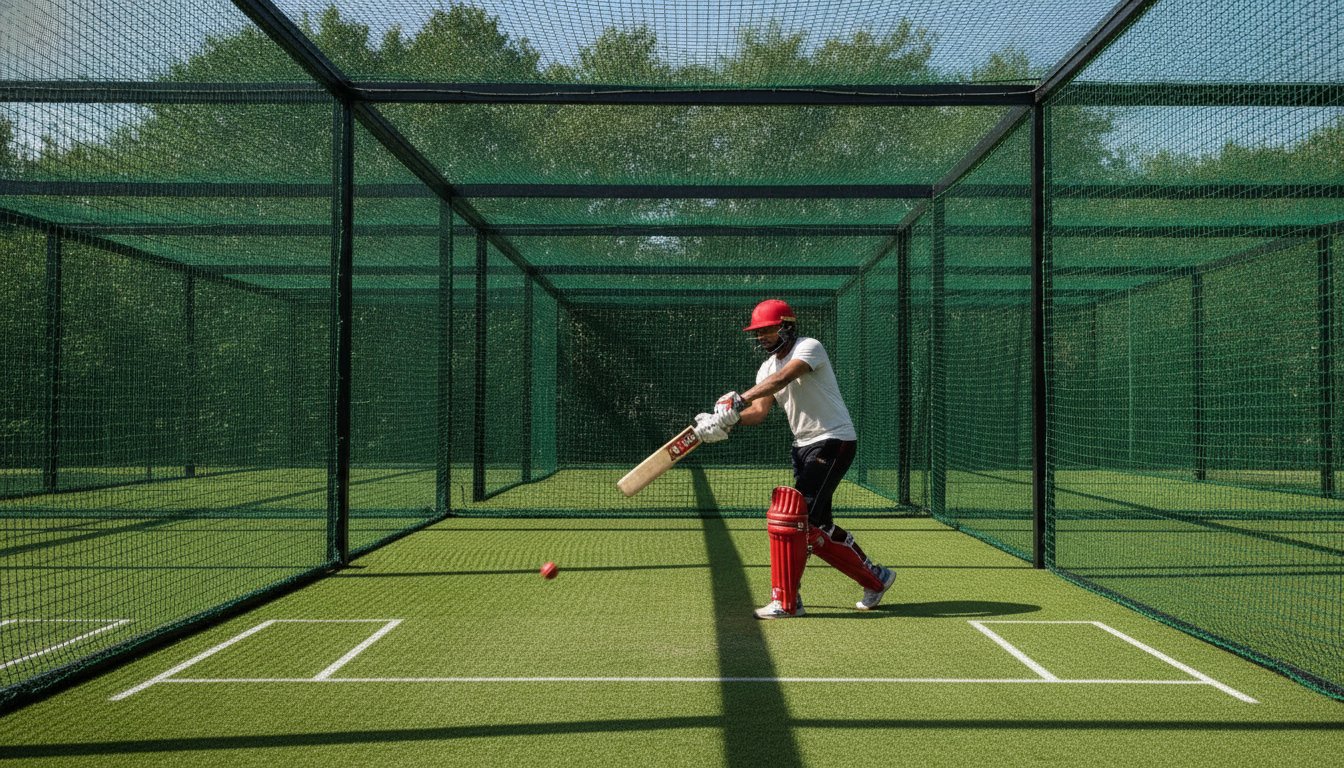
Cricket Facility Design and Build: The Professional Guide to High-Performance Spaces
Would you commit your club’s hard-earned budget to a project if you weren't certain it would still be performing at a professional level in twenty years? Navigating the complexities of cricket facility design and build often feels like a high-stakes gamble for committee members and school governors. You're likely balancing the pressure to meet strict governing body standards with the very real fear that chosen materials won't survive a single harsh winter. It's natural to worry about the safety of your players and the long-term viability of such a significant investment.
We understand that a high-performance space is more than just a surface; it's a foundation for the future of the game. This guide provides the technical clarity you need to move forward with confidence. You'll learn the essential principles of constructing a durable facility that meets professional standards and ensures the safety of every student or club member. We'll provide a clear roadmap from the initial design phase to the first use. This includes insights into navigating modern opportunities like the £45 million Building Belonging in Cricket Fund and the structural choices that help guarantee your facility remains a community asset for decades.
Key Takeaways
- Understand why a successful cricket facility design and build project begins with a bespoke site survey to address unique ground constraints and long-term goals.
- Identify the high-grade material specifications for frameworks, netting, and surfaces that ensure your installation withstands both heavy use and the elements.
- Learn the essential safety standards regarding pitch orientation and lane margins to protect your players and satisfy regulatory requirements.
- Gain a clear understanding of the construction timeline and the necessity of partnering with insured contractors to manage the project from start to finish.
- Discover how proactive maintenance and comprehensive insurance protect your investment, ensuring your facility remains a high-performance space for decades.
The Fundamentals of Cricket Facility Design and Build
A successful cricket facility design and build project is far more than a simple installation of poles and netting. It's a holistic, methodical journey that begins with a detailed site survey and continues long after the final bolt is tightened. By treating the project as a full lifecycle, you ensure the facility remains a safe, high-performance environment for decades. This approach links the technical cricket pitch specifications directly to the practical needs of your specific site. Whether you are installing a single lane or a multi-bay Radford EZY Net System™, the goal is to create a space where players focus entirely on their technique without worrying about safety or surface consistency.
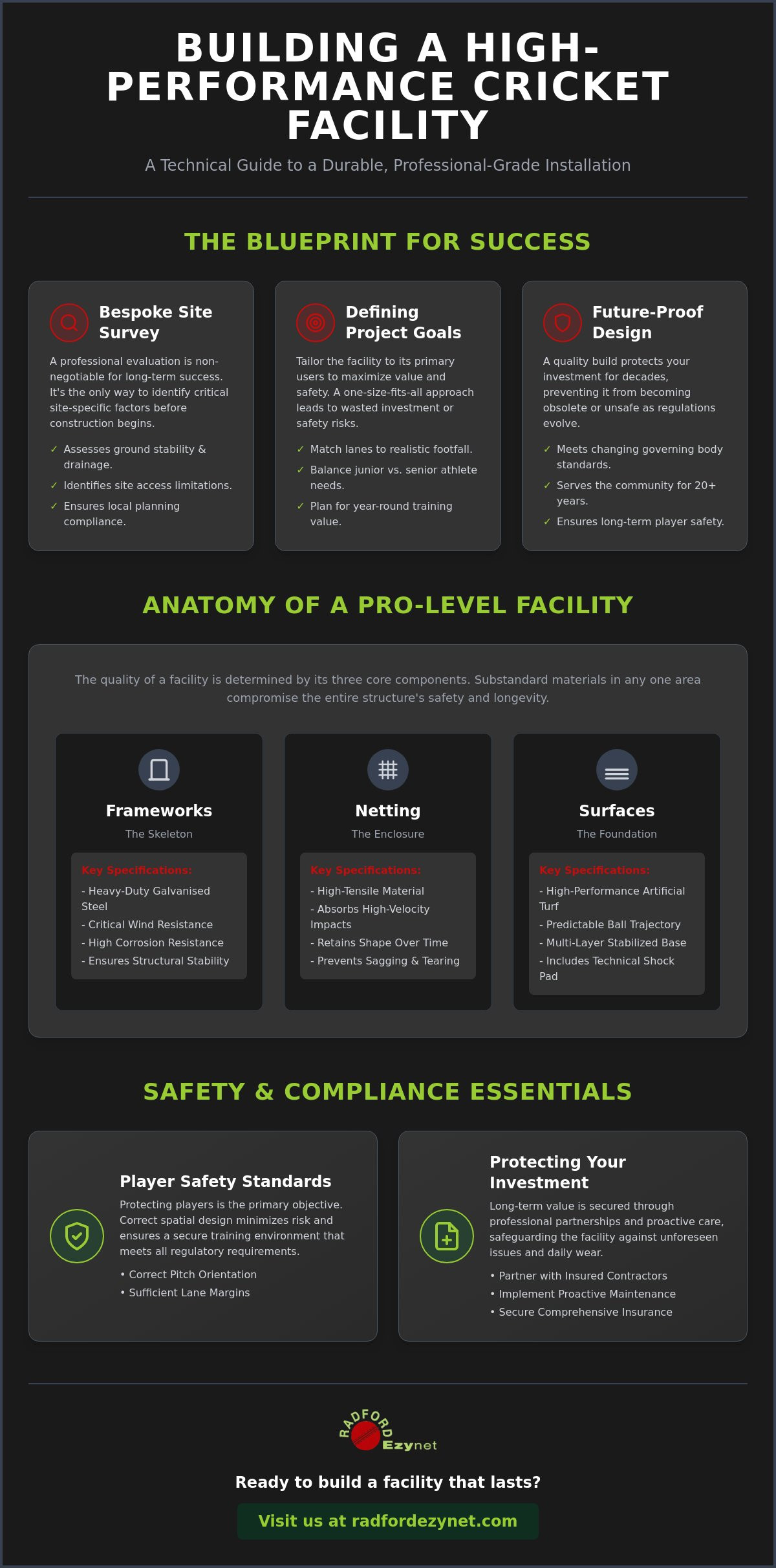
Bespoke design is essential because no two sites are identical. Varying budgets and physical constraints require tailored solutions that don't compromise on professional standards. A well-designed facility does more than provide a place to practice; it actively accelerates player development by offering predictable ball bounce and reliable footings. It also acts as a safeguard for your organization. By future-proofing the design against changing governing body standards, you protect your investment from becoming obsolete or unsafe as regulations evolve.
Defining Your Project Goals
Every facility must serve its primary users effectively. A school focused on junior development requires different safety margins and lane configurations than a professional club training senior athletes. You must determine your realistic footfall to decide how many lanes are necessary. Overcrowding leads to safety risks; under-utilised space is a wasted investment. Balancing the need for year-round training with the seasonal demands of outdoor practice ensures your Cricket Practice Nets provide value throughout the entire calendar year. High-quality Cricket Equipment performs best when the environment is designed for its specific use case.
The Importance of Professional Site Surveys
Skipping a professional survey is a common cause of long-term project failure. Professional evaluators look at ground stability, drainage requirements, and potential environmental impacts that aren't visible to the naked eye. They identify site access limitations that could hinder construction machinery or increase costs unexpectedly; to ensure your project has the right equipment, you can explore Plant and Machinery Hire for a range of specialized tools. A thorough survey also helps you understand local planning permissions, ensuring your project meets all legal and regulatory standards from the outset. This careful preparation is what makes the difference between a facility that lasts five years and one that serves the community for over twenty. It provides the peace of mind that your foundation is as solid as the structures built upon it.
Choosing the Right Components: Netting, Surfaces, and Frameworks
Selecting the ideal components for a cricket facility design and build project requires a focus on structural integrity and performance consistency. The facility stands on three essential pillars: the framework, the netting, and the playing surface. Each element must be vetted for its ability to withstand the specific environmental pressures of your site. When these three pillars are correctly aligned, they create a safe, professional environment that supports player development for decades. If one component is substandard, the safety and longevity of the entire investment are at risk.
The framework acts as the skeleton of the facility. For outdoor installations, steel specifications are critical for ensuring wind resistance. We utilize heavy-duty galvanised steel that resists corrosion and provides the necessary weight to remain stable during adverse weather. This choice isn't just about strength; it's about the stability of the entire asset. A flimsy frame leads to sagging nets and eventual structural failure. High-tensile netting is equally vital, as it must absorb the impact of high-velocity balls without tearing or losing its shape over time.
Artificial surfaces provide the foundation for skill development. Unlike natural grass, a high-performance artificial surface offers a predictable ball trajectory and consistent bounce. This reliability is vital for bowlers and batters to hone their technique under professional conditions. The construction involves multiple layers, including a stabilized base and a technical shock pad. You can explore our detailed breakdown of all-weather cricket pitch construction to understand how these layers interact to create a professional-grade training environment; for those looking to outfit the rest of their facility, you can discover GW Flooring for expert supply and installation of high-quality floor coverings.
Selecting High-Performance Netting Systems
Netting is your primary safety barrier. For outdoor facilities, UV-stabilised netting is non-negotiable. Without this protection, the sun's rays degrade the polymer, causing the mesh to become brittle and fail under impact. The Radford EZY Net System™ offers a bespoke advantage, allowing for configurations that fit specific site dimensions while maintaining professional tension. When choosing mesh sizes and weights, it's a balance between visibility for coaches and effective ball containment. Heavyweight netting provides peace of mind for schools where safety is the paramount concern.
Artificial Surfaces and Pitch Construction
Durability is the defining factor for high-traffic school and club environments. Lanes require a surface that doesn't "track" or wear thin in the crease area after a single season. The combination of a high-quality carpet and a resilient shock pad mimics the feel of a well-prepared grass wicket while requiring significantly less maintenance. This setup ensures that players have access to professional-standard training facilities regardless of the weather. If you're ready to discuss your specific requirements, our team can provide professional cricket facility solutions tailored to your site.
Essential Design Standards: Safety, Compliance, and Orientation
Professional design separates a high-performance space from a standard training area. A core part of cricket facility design and build involves adhering to rigorous safety and compliance frameworks. These aren't just suggestions; they're the rules that protect your organization from liability and ensure player focus. When we design a bespoke facility, we prioritize technical precision to mitigate the risk of stray balls and ensure the environment meets the highest vetting levels. This methodical approach transforms a simple plot of land into a secure, long-term asset for your club or school.
Pitch orientation is a fundamental technical requirement that determines the usability of your facility. A strict North-South alignment is the industry standard. This positioning manages sun glare and shadows effectively throughout the day. If a pitch runs East-West, a batsman might face a low sun during late afternoon sessions, which is both dangerous and counterproductive for training. By getting the orientation right during the design phase, you ensure that visibility remains consistent for both bowlers and batsmen, regardless of the time of day.
We maintain specific safety margins between lanes and perimeter fences to prevent accidents. Crowding too many lanes into a small footprint is a common mistake that compromises player safety. Professional standards dictate minimum distances to ensure that players in adjacent lanes don't interfere with each other or risk being struck by a ball from a neighbouring net. Adhering to guidelines from governing bodies like the ECB or SAPCA ensures your facility is compliant and eligible for professional use and potential funding opportunities.
Player Safety and Ball Containment
Managing risk means identifying "no-fly zones" to protect spectators and adjacent property. In high-density urban areas, this often requires the installation of "roof" netting to prevent balls from leaving the facility entirely. For educational environments, using the best cricket nets for schools is essential for passing strict health and safety audits. These systems are engineered to contain high-impact shots while protecting the surrounding community. This level of thoroughness provides peace of mind for headteachers and site managers alike.
Lighting and Visibility Requirements
Visibility is as crucial as structural stability. Safe evening training requires specific lux levels to ensure the ball is visible at high speeds. We also consider the contrast between the ball and the netting. Darker mesh colours often provide better contrast for batsmen, while intelligent placement of lighting reduces distracting shadows. Consistent lighting levels across the entire cricket facility design and build project ensure that players can train safely under floodlights without experiencing "blind spots" that lead to injury.
The Construction Journey: Navigating the Build Process
The transition from a technical drawing to a finished training space is a methodical journey that requires precision at every stage. A professional cricket facility design and build project typically moves from contract signing to the first ball bowled over a period of several weeks, depending on site complexity and weather conditions. This timeline is managed carefully to ensure that every structural element has time to settle and meet our rigorous quality standards. By following a logical, step-by-step path, we build a cumulative sense of trust and ensure the final structure is a stable, long-term asset for your community.
Partnering with insured and experienced contractors is the most effective way to mitigate risk during construction. Professional installers understand the nuances of sports-specific engineering, from the tension required in a net to the exact compaction levels of a sub-base. This expertise prevents common pitfalls that lead to surface shifting or frame instability. The sub-base remains the most critical part of the entire build. If the foundation is compromised, even the highest-quality artificial carpet will eventually fail to provide a true bounce. We treat the groundworks phase with the same level of technical scrutiny as the final surface installation.
Before the facility is officially handed over, a thorough "snagging" process is conducted. This final inspection ensures that every component, from the anchor points to the mesh tension, meets the original design specifications. We walk through the site with you to verify that the installation is clean, safe, and ready for immediate use. This commitment to detail ensures that your investment is protected from the very first day of operation. If you are ready to begin your project, you can contact our specialist team to discuss a bespoke installation plan.
Phase 1: Groundworks and Foundation
Construction begins with professional excavation and the installation of a dedicated drainage system. This step is vital for preventing waterlogging, which can degrade the sub-base over time and lead to uneven surfaces; for expert assistance with similar groundworks and property maintenance, Oxford Driveways And Roofing Ltd. offers professional services to ensure structural integrity. We use precision levelling techniques to create a perfectly flat foundation, ensuring the final pitch surface offers a reliable ball trajectory. Once the ground is prepared, we set the heavy-duty anchor points for the permanent or semi-permanent frames. These foundations must be deep and stable enough to withstand significant wind loads and the daily vibration of high-impact practice.
Phase 2: Installation and Commissioning
The second phase focuses on the visible elements of the facility. Our team assembles the steel framework and applies professional tension to the netting system to ensure it absorbs ball impact without sagging. Laying the artificial surface requires expert handling to ensure seamless joins and a consistent feel underfoot; for those who require similar precision for indoor clubhouse flooring, Surefit Carpets Ltd provides expert supply and installation. For a more detailed breakdown of these technical stages, you can refer to our guide on cricket practice area installation. This comprehensive approach ensures that the finished facility is not just a place to play, but a high-performance environment built to professional standards.
Protecting Your Investment: Long-term Maintenance and Insurance
Maintenance is the silent partner of every successful cricket facility design and build project. It's the ongoing commitment that ensures a high-performance space remains safe and functional for the next twenty years. While the initial construction is a significant milestone, the quality of ongoing care determines the true return on your investment. Neglecting regular inspections doesn't just lead to a dip in playing standards; it creates avoidable safety hazards and may void essential structural warranties. By treating maintenance as a core component of the facility's lifecycle, you protect the club's budget from the sudden, high costs of emergency repairs or premature replacement.
Professional maintenance ensures that the technical specifications established during the design phase are preserved. Over time, even the most durable materials face environmental stress. UV rays, heavy rain, and high-impact use from Cricket Equipment all take a toll on the integrity of the installation. If you are managing a pavilion or indoor centre alongside your practice nets, you can visit I R. Wilson Roofing for expert advice on protecting these structures from the elements. We position ourselves as a dependable partner for the entire life of your facility, providing the technical expertise needed to keep your Cricket Practice Nets and surfaces in peak condition. This methodical approach builds a cumulative sense of trust, knowing your asset is being managed by a seasoned expert.
The Annual Inspection Checklist
A proactive approach begins with a comprehensive annual checklist. This review identifies minor issues before they escalate into structural failures or safety risks. A thorough inspection should cover several critical areas:
- Netting Integrity: Check for any fraying or holes in your Cricket Practice Nets that could compromise ball containment.
- Frame Stability: Verify that all safety bolts and tensioning wires remain secure and that the frame hasn't shifted due to ground movement.
- Surface Performance: Inspect the artificial carpet for signs of wear in high-traffic areas like the batting crease or bowler's delivery stride.
- Hygiene and Grip: Perform a professional cleaning of the surface to remove moss, silt, or debris, which maintains both player grip and consistent ball bounce.
Bespoke Maintenance and Service Contracts
Investing in a recurring service contract for your Radford EZY Net System™ is the most reliable way to extend the life of your facility by ten years or more. These bespoke agreements provide schools and clubs with the peace of mind that their training environment is being monitored by an authoritative specialist. In high-liability environments like schools, the value of insured maintenance work cannot be overstated. It provides a clear paper trail of safety compliance and professional care. If you're currently planning a new project, it's wise to consult our experts on club cricket practice net investments to understand how maintenance is integrated into our long-term support model. This end-to-end journey ensures that your facility remains a source of pride for the community, providing a stable platform for cricketers to excel for decades.
Securing the Future of Your Training Environment
A professional cricket facility is a permanent investment in the quality and safety of your training environment. By aligning technical standards like North-South orientation with durable, UV-stabilized materials, you create a space that supports player growth for twenty years or more. A successful cricket facility design and build project doesn't end at handover; it relies on a consistent maintenance lifecycle to preserve its professional performance and safety standards. This methodical approach ensures your facility remains a high-performance asset for the long term.
At Radford EZY Net, we bring over 40 years of industry experience to every project. Our portfolio includes high-profile installations for Bath Cricket Club and Cricket South Africa, proving our capability to deliver at the highest levels of the game. We provide a full-service experience, including insured installation and ongoing care, to ensure your project is managed with total reliability. We take pride in being a dependable partner for schools and clubs across the country.
We're here to help you turn your vision into a high-performance reality. Request a bespoke cricket facility design consultation with Radford EZY Net to begin your journey. Together, we can build a lasting legacy for your club or school that inspires the next generation of cricketers.
Frequently Asked Questions
How much space is required for a standard two-lane cricket facility?
A standard two-lane facility typically requires a footprint of 33 metres in length and approximately 8 to 9 metres in width. This space allows for a full-length pitch, adequate bowler run-ups, and the necessary safety margins between the lanes. Providing this generous footprint prevents player congestion and ensures that bowlers can train at match-intensity speeds without restriction.
Do I need planning permission for outdoor cricket net installation?
You should always consult your local planning authority because requirements vary based on the structure’s height and its proximity to property boundaries. While some portable systems fall under permitted development, permanent steel frameworks or floodlighting often require formal approval. We recommend conducting this check early in the cricket facility design and build process to ensure your project remains compliant with local regulations.
What is the lifespan of a professional artificial cricket pitch?
A professional artificial cricket pitch typically lasts between 10 and 15 years when it's supported by a regular maintenance schedule. The longevity of the surface depends heavily on the quality of the initial sub-base construction and the volume of daily player traffic. Using high-grade carpets and technical shock pads helps the facility maintain a consistent bounce and professional feel throughout its lifecycle.
Can indoor cricket facilities be used for other sports?
Indoor facilities can be adapted for multi-sport use by incorporating retractable netting and versatile flooring solutions. These spaces are frequently used for sports like hockey or football training when the cricket nets are safely stowed away. It's essential to select a surface that provides the correct ball bounce for cricket while remaining durable enough for the lateral movements of other sports. To ensure the building itself remains weather-tight and secure, you can learn more about Archers Roofing Services Ltd for professional flat roofing services.
What are the main differences between school and club cricket facility requirements?
School requirements focus heavily on high-density safety and ease of supervision, whereas clubs often prioritize professional-grade performance for senior match preparation. Educational facilities must meet strict safety audits, which often dictate the use of specific netting weights and enclosed roof sections. Clubs might choose bespoke lane configurations that more closely mimic the variety of match-day conditions found in league cricket.
How often should a cricket net safety inspection be carried out?
We recommend a comprehensive safety inspection at least once every twelve months, ideally before the start of the summer season. This annual review identifies net fraying, loose structural bolts, or minor surface subsidence that could lead to player injury if left unaddressed. Regular checks ensure your cricket facility design and build investment remains a safe environment and satisfies your insurance obligations.
Is it possible to upgrade an existing cricket practice area?
It's entirely possible to upgrade an existing area by resurfacing the pitch or replacing outdated netting with modern systems like the Radford EZY Net System™. Upgrading is a cost-effective way to improve performance without the disruption of a full excavation. We always assess the stability of the existing sub-base to ensure it can support the tension and weight of new, high-performance components.
What are the benefits of an insured installation service?
An insured installation service provides your organization with professional accountability and vital financial protection. It ensures that the work is performed to recognized industry standards by vetted contractors who are covered for structural defects or accidental damage. This approach offers the peace of mind that your facility is built correctly and that your long-term investment is secure from the very first day.


