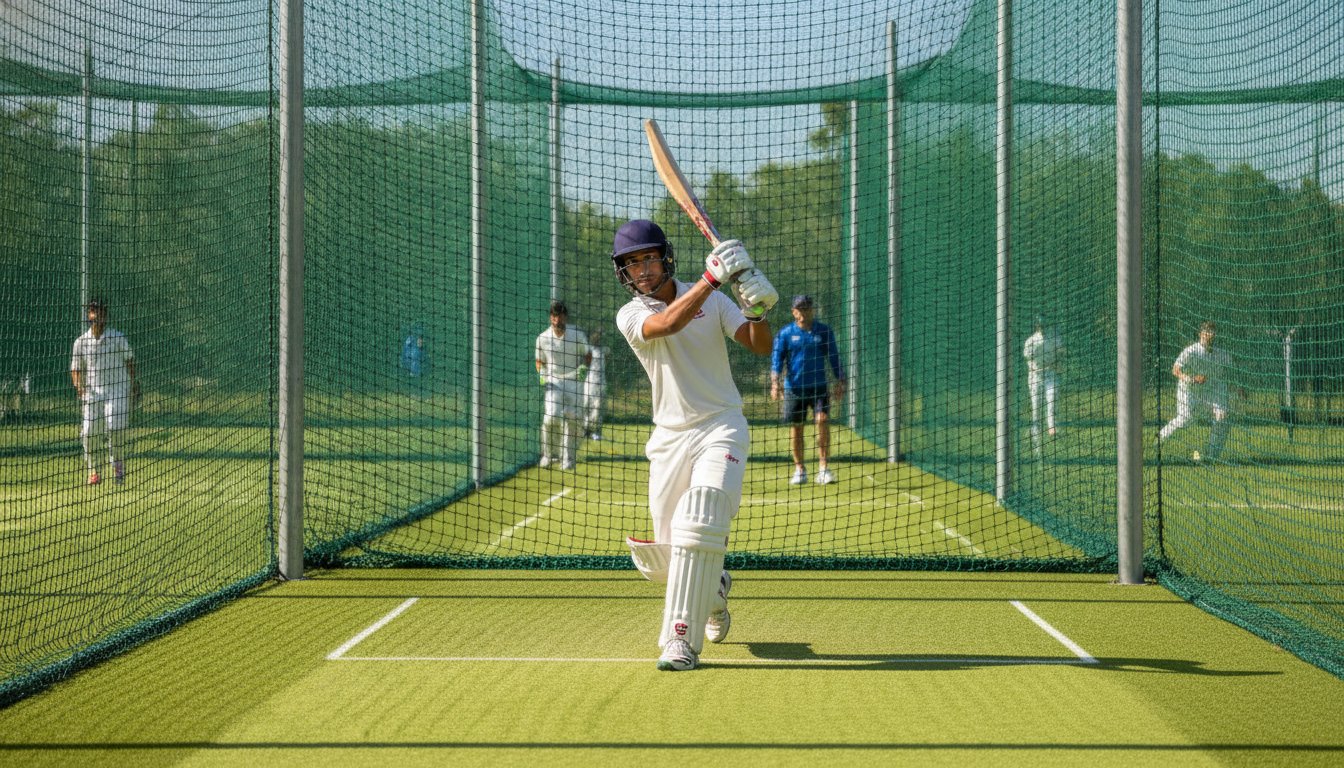
Professional Cricket Net System for Academies: The Ultimate Facility Guide (2026)
A high-performance training facility isn't defined by its size, but by the resilience of the equipment that supports every session. A professional cricket net system for academies is far more than just a safety barrier; it's a fundamental coaching tool that must withstand thousands of high-velocity impacts every week without losing its integrity. You likely understand the frustration of seeing standard netting sag or fray within months, creating inconsistent bounce and safety hazards that disrupt the rhythm of a professional practice environment.
Investing in a robust infrastructure ensures your facility remains a dependable asset for years to come. This guide helps you design a setup that aligns with the ECB 2026 Recreational Cricket Safety Regulations while significantly reducing your maintenance overhead. We will examine the technical specifications required for elite throughput, the benefits of the Radford EZY Net System™, and how to optimize your training space to provide a stable, professional environment for the next generation of talent.
Key Takeaways
- Learn the technical specifications required for a professional cricket net system for academies designed to withstand over 1,000 hours of intensive annual training.
- Identify the core differences between HDPE and Nylon netting to select materials that offer maximum UV resistance and durability in the British climate.
- Evaluate the benefits of permanent cage installations versus the flexibility of the Radford EZY Net System™ for multi-use sports facilities.
- Understand how strategic facility orientation and precise lane dimensions can eliminate sun glare and improve safety for both batters and bowlers.
- Discover the importance of professional site surveys and insured installation in creating a high-performance coaching environment that meets 2026 safety standards.
Understanding the Demands of a Cricket Net System for Academies
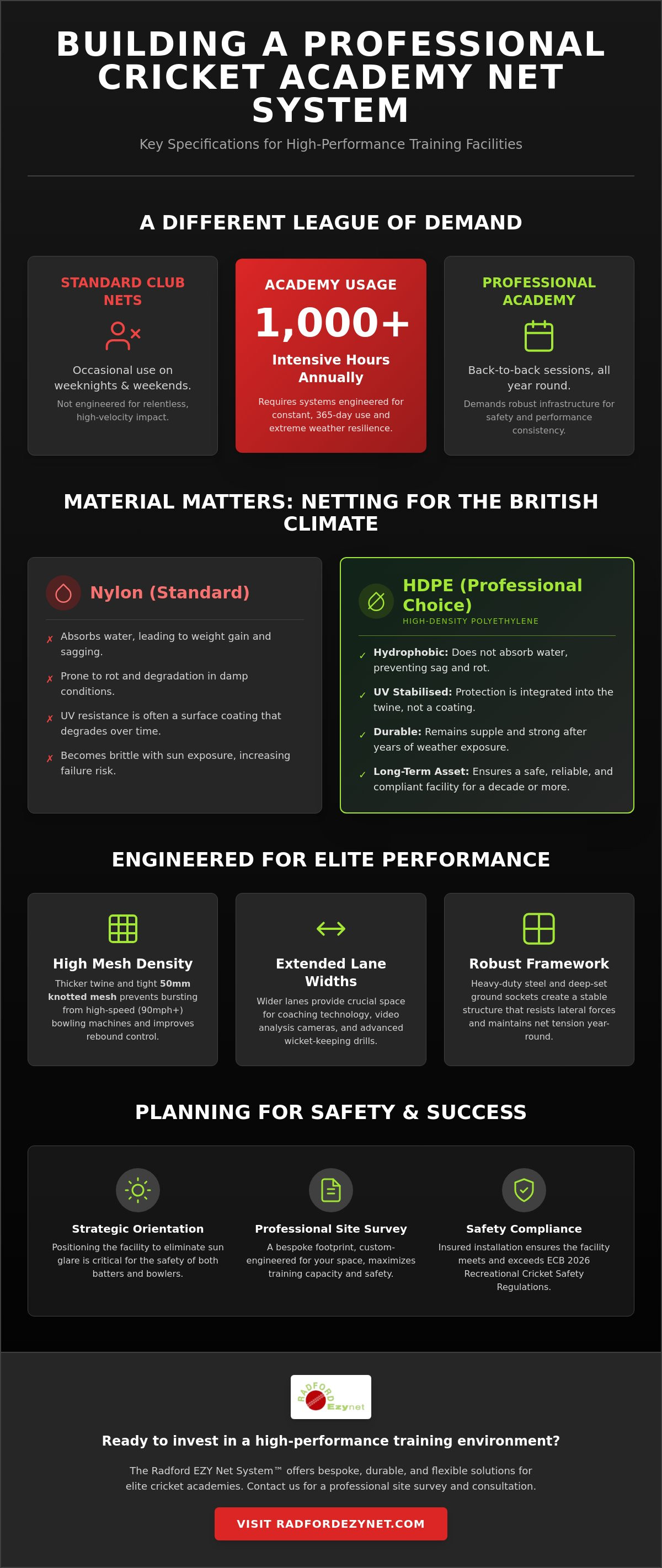
While a standard club net might see use on a couple of weeknights and weekend mornings, an academy facility operates on a completely different scale. It's common for professional training hubs to exceed 1,000 hours of intensive usage annually. This relentless schedule places immense stress on every component, from the ground sockets to the roof netting. When you're managing a facility that hosts back-to-back sessions throughout the year, the reliability of your infrastructure becomes the backbone of your coaching program.
Understanding what cricket nets are in a general sense is the first step, but for an academy, they must function as a precision-engineered environment. High-performance netting isn't just about containment; it's about creating a predictable, safe space where players can focus entirely on skill acquisition without fear of equipment failure. Standard "off-the-shelf" solutions often fail because they aren't designed for the focused, repetitive impact of professional-grade bowling machines.
An academy-grade cricket net system for academies is a bespoke, multi-lane environment engineered specifically for constant, high-velocity impact and long-term structural stability.
The High-Volume Usage Challenge
Professional bowling machines can fire hundreds of balls per hour at speeds exceeding 90mph. This creates a high-frequency impact cycle that quickly degrades lower-quality materials. A critical factor in academy design is "rebound control." This ensures that balls drop safely to the floor rather than ricocheting back towards the coach or the batter. Since many academies operate 365 days a year, the system must also maintain its structural integrity through extreme weather cycles without sagging or losing its protective properties.
Academy vs. Club Specifications
The technical differences between club and academy setups are significant. Academy systems typically require specific engineering to handle the throughput of elite talent. Key requirements include:
- Higher Mesh Density: Thicker twine and tighter knots are essential to prevent "bursting" under concentrated fire from bowling machines.
- Extended Lane Widths: Wider lanes allow space for coaching technology, video analysis cameras, and wicket-keeping drills that require more lateral movement.
- Bespoke Footprints: Most academies don't have perfectly rectangular spaces, making custom-engineered layouts essential to maximize training capacity.
By choosing a tailored solution over a generic kit, you ensure your investment provides a consistent training experience for every player who enters the facility. This approach minimizes downtime and keeps your coaching staff focused on development rather than repairs.
The Anatomy of Professional Academy Netting Materials
Selecting the right materials is a technical decision that determines the long-term viability of your facility. In a professional cricket net system for academies, the netting and framework must work in unison to manage high-energy impacts while resisting environmental degradation. While standard nets might look similar to the untrained eye, the molecular composition of the twine and the grade of the steel make the difference between a short-term fix and a ten-year asset.
High-Density Polyethylene (HDPE) is the industry standard for outdoor academy environments. Unlike Nylon, HDPE is hydrophobic; it doesn't absorb water or gain weight during heavy rain. This prevents the sagging and rot that often plagues club-level setups. UV stabilisation is integrated during the extrusion process rather than applied as a surface coating. This ensures the netting remains supple and strong even after years of exposure to the British weather cycles, preventing the brittleness that leads to unexpected mesh failure and insurance compliance issues.
Netting Twine and Mesh Selection
Knotted netting is typically the preferred choice for elite training centres. The knots provide a mechanical lock that maintains the mesh shape even when the system is under high tension. For ball containment and coach visibility, a 50mm square mesh is standard. This provides a clear line of sight for technical analysis while ensuring ball security. If your academy is located in an area with public access, choosing a higher twine diameter offers an added layer of vandal resistance, protecting your investment from opportunistic damage.
Framework and Tensioning Systems
Structural stability starts with heavy-duty ground sockets. These must be deep enough to resist the lateral force of the netting when it's fully tensioned. A professional "box" layout is achieved through a combination of galvanised steel posts and high-tensile wire tensioning. This setup eliminates the "bellowing" effect seen in cheaper systems, providing a consistent training environment across every lane. Many professional cricket nets rely on bespoke steelwork to ensure a perfect fit within the available space. If you're unsure which material grade suits your specific site, arranging a professional site survey can provide the technical clarity needed for a secure investment.
Fixed vs. Demountable Systems: Which Suits Your Academy?
Selecting the right architecture for your facility is a decision that impacts your coaching logistics for the next decade. Every academy must balance the need for high-performance training with the reality of available space and land use. Choosing a cricket net system for academies involves deciding between the absolute stability of a permanent structure and the versatile flexibility of a demountable one. Both options provide professional environments, yet they serve different operational goals.
Permanent installations offer a "set and forget" solution for dedicated cricket centres. These structures are built to remain in place year-round, providing a consistent visual landmark for your facility. However, for schools or multi-use sports clubs, a permanent cage can be a significant spatial commitment. Traditional nets often occupy large areas that cannot be used for other sports or events during the off-season, which can limit the overall utility of your site.
The Flexibility of the Radford EZY Net System™
The Radford EZY Net System™ provides a strategic alternative for facilities that require multi-functional space. This demountable solution allows you to transform a shared playing field into a professional-grade training centre in minutes. Since the system can be fully removed, it protects the underlying surface from excessive wear during the winter months. This is particularly beneficial for academies that share ground with rugby or football teams. Removing the nets during school holidays or the off-season also provides a security advantage, as it eliminates the risk of unauthorised use or opportunistic vandalism when the site is unsupervised.
Permanent Installations for High-Performance Hubs
When your facility is a dedicated centre of excellence, a permanent cricket cage installation is often the most efficient choice. These systems are typically integrated with all-weather artificial surfaces, creating a seamless environment for high-intensity drills. Structural considerations for these hubs include:
- Foundation Depth: Ensuring ground sockets are engineered to handle the constant tension of heavy-duty netting.
- Artificial Surface Integration: Coordinating the framework installation with the laying of elite-grade shock pads and carpets.
- Indoor Specifics: Utilizing trackway systems or tensioned cages that work with existing building supports in indoor centres.
A permanent system is a declaration of long-term intent, providing a stable, high-volume environment for elite player development. Whether you opt for a fixed or demountable setup, the focus remains on providing a reliable, safe, and professional environment that reflects the standards of your academy—a commitment to excellence shared by specialized programs like The Lab Basketball Academy.
Planning and Designing for Academy Player Development
Design is the bridge between a functional facility and an elite coaching environment. When implementing a professional cricket net system for academies, the layout must be dictated by the specific needs of high-performance training. Orientation is the first critical factor. A strict north-south alignment is essential to prevent sun glare from affecting batters or bowlers during late afternoon sessions. If the sun is positioned directly behind either participant, the quality of training diminishes and safety risks increase.
Lane dimensions also require a technical approach that goes beyond standard club requirements. For academy use, lanes should ideally be 3.66m wide to provide sufficient lateral space for wicket-keeping drills and the placement of coaching technology. This extra width allows for the safe positioning of video analysis cameras and tripods without obstructing the player's natural movement. Integrating power points at the bowler's end for ball machines is another essential step that eliminates the hazard of trailing cables across the training area.
Safety zoning is a non-negotiable aspect of professional design. In a multi-lane cricket net system for academies, creating "buffer zones" or using reinforced side curtains helps manage the energy of high-velocity impacts. This protection is vital during group sessions where multiple lanes are active simultaneously, ensuring that coaches can provide feedback without being exposed to stray balls from adjacent lanes.
Optimising Multi-Lane Efficiency
The number of lanes you install should directly reflect your student-to-coach ratio to prevent bottlenecking during sessions. Many elite facilities now utilize retractable internal curtains to increase flexibility. This allows you to open up two lanes into a single larger space for specialized fielding drills or match-scenario training. Additionally, matching the speed and bounce of your artificial surface to your specific coaching goals ensures that players develop the correct reactions for the match conditions they will face.
Coaching Visibility and Access
Visibility is a technical requirement for elite performance. Integrating "white-sight" backgrounds at the bowler's end provides batters with the clear contrast needed to track the ball from the point of release. Access routes and gate placements should be planned to facilitate quick transitions between drills, which maximizes active coaching time. For pace bowling development, maintaining ECB-compliant lane lengths of at least 22 metres is essential to ensure bowlers can complete their full follow-through within a protected environment. If you are ready to plan your layout, a bespoke design consultation can provide the technical expertise needed to optimize your space.
The Radford EZY Net Approach: Bespoke Academy Solutions
Selecting a cricket net system for academies is a significant capital decision that requires a partner with a proven track record. With over 40 years of expertise, we've developed a methodical approach to facility design that prioritises long-term stability and player safety. Our history includes delivering high-performance environments for prestigious organisations ranging from Bath Cricket Club to international Centres of Excellence. This extensive experience ensures that every project benefits from a deep technical understanding of how elite athletes interact with training structures under high-pressure conditions.
We believe that a facility's success is rooted in the thoroughness of its initial planning. Managing a professional training hub requires a focus on both performance and risk mitigation. Our insured installation process removes the burden of liability from academy directors, providing a secure foundation for every session. We've seen how poorly planned facilities can fail under the pressure of daily use. That's why our site surveys are so exhaustive. We examine everything from drainage patterns to access routes, ensuring the final result is a seamless, durable addition to your sports department.
Bespoke Design and Installation
Every academy site presents unique challenges, from irregular boundaries to specific soil conditions. We don't believe in generic, one-size-fits-all solutions. Our process begins with a professional site inspection and safety assessment to identify potential risks before any ground is broken. This thoroughness ensures full compliance with school safety standards and local planning requirements. By tailoring the Radford EZY Net System™ to your specific site constraints, we maximise your training footprint while maintaining the highest levels of structural integrity and aesthetic appeal.
Longevity Through Professional Maintenance
A professional facility requires ongoing care to remain a safe and effective coaching asset. Annual inspections are critical for maintaining academy insurance and ensuring the system meets the latest safety protocols. Our comprehensive service and maintenance contracts provide peace of mind by addressing minor wear before it becomes a costly failure. If you have an existing facility that is showing signs of age, our refurbishment services can often extend the life of your netting and framework by decades. Every professional cricket net system for academies we install is backed by this commitment to a full lifecycle of care. To discuss your specific requirements, contact our cricket net installation specialists for a tailored academy quote.
Securing the Future of Your Elite Training Environment
Designing an elite facility requires a balance of technical precision and durable materials. By prioritising high-density netting and strategic lane orientation, you create a space where players can train with absolute confidence. Whether you choose a permanent installation or the versatile Radford EZY Net System™, your focus remains on reducing long-term maintenance while maximising coaching efficiency. Implementing a professional cricket net system for academies is an investment in the next generation of talent, requiring a partner who understands the rigours of high-volume usage.
With over 40 years of industry-leading experience, we take pride in being an approved supplier to the ICC and Cricket South Africa. Our thorough process includes insured installation and comprehensive maintenance contracts to protect your capital investment for years to come. We're here to ensure your facility meets the highest standards of safety and performance. Request a bespoke academy facility consultation from Radford EZY Net today to begin your project. We look forward to helping you build a facility that truly reflects the ambitions of your academy and its players.
Frequently Asked Questions
What is the ideal lane width for a professional cricket academy net?
3.66 metres is the standard lane width for a professional cricket net system for academies. This dimension provides enough lateral space for wicket-keeping practice and the safe placement of video analysis equipment. Wider lanes also reduce the frequency of direct impacts on the side netting, which helps extend the overall lifespan of the mesh during high-volume training sessions.
How long should an academy-grade cricket net system last?
A high-quality academy-grade system typically lasts over 10 years when it's professionally maintained. While the galvanised steel framework is engineered for decades of service, the netting itself may require replacement or refurbishment every 5 to 7 years. This lifespan depends heavily on the volume of impact from bowling machines and the consistency of your annual safety inspections.
Can the Radford EZY Net System™ be installed on existing artificial surfaces?
The Radford EZY Net System™ is specifically engineered for installation on existing artificial surfaces without causing structural damage. It utilizes flush-fitting ground sockets that remain level with the turf, ensuring the area stays safe for other sports when the nets are removed. This versatility makes it an ideal choice for multi-use sports halls or all-weather outdoor pitches.
Are demountable cricket nets as stable as permanent fixed cages?
Demountable systems offer professional-grade stability that rivals permanent fixed cages when they're installed correctly. By utilizing high-tensile wire tensioning and heavy-duty ground anchors, these systems maintain a rigid "box" shape during use. They provide the same reliable rebound characteristics required for elite training while offering the added benefit of being removable during the off-season.
What safety standards should academy cricket nets meet in the UK?
Academy facilities in the UK should adhere to the ECB's Performance Standards for Non-Turf Cricket Pitches (TS6) and the updated 2026 Recreational Cricket Safety Regulations. These guidelines cover structural integrity, mesh density, and the safe operation of training environments. Compliance is essential for ensuring player safety and maintaining valid facility insurance throughout the coaching year.
How do you prevent ball ricochets in multi-lane training facilities?
Preventing ball ricochets requires a combination of correct netting tension and strategic layout design. Using weighted bottom edges or "lead lines" ensures the netting remains grounded, while internal baffle curtains help absorb the energy of high-velocity impacts. Designing your cricket net system for academies with these energy-absorbing features protects coaches and players in adjacent lanes from stray balls.
Can ball machines be easily integrated into the Radford EZY Net System™?
Ball machines are easily integrated into our systems through the inclusion of dedicated power points and extended lane lengths. We recommend a minimum lane length of 22 metres to accommodate the machine's footprint and the player's reaction time. Wider lanes also provide coaches with a safe area to operate the machine without obstructing the batter's line of sight.
What maintenance is required for outdoor academy netting during the winter?
Outdoor netting requires minimal but consistent maintenance during the winter months to prevent degradation. For demountable systems, we recommend full removal and dry storage to avoid debris buildup and unnecessary weather wear. Fixed systems should be checked regularly for snow accumulation on roof netting and to ensure that tensioning wires haven't slackened during high winds.


